Coca-Cola – Remove Labels This Ramadan

Coca-Cola – Remove Labels This Ramadan

Introduction

This case study delves into the key aspects of the 2015 Coca-Cola marketing campaign, \”Remove Labels This Ramadan,\” which aimed to promote tolerance and unity during the holy month of Ramadan. The study explores the campaign\’s background, objectives, target audience, strategy, execution, creative elements, and results.

Background/Problem

The need for this campaign arose due to the growing divisions and prejudice in society based on race, religion, and cultural background. Coca-Cola aimed to address this issue by promoting a message of tolerance, acceptance, and unity during the holy month of Ramadan, when people traditionally come together to celebrate.

Campaign Objectives

The campaign\’s primary objectives included:

  1. Raising brand awareness by aligning Coca-Cola with a message of tolerance and unity.
  2. Encouraging social conversations around the topic of prejudice and acceptance.
  3. Strengthening Coca-Cola\’s brand image as a socially responsible company.
  4. Increasing sales and customer engagement during Ramadan.

Target Audience & Target Market

Coca-Cola targeted a diverse audience for this campaign, focusing on people of various cultural, religious, and ethnic backgrounds. The campaign aimed to resonate with those who value tolerance, understanding, and unity, and to create a sense of belonging and togetherness among its audience.

Strategy

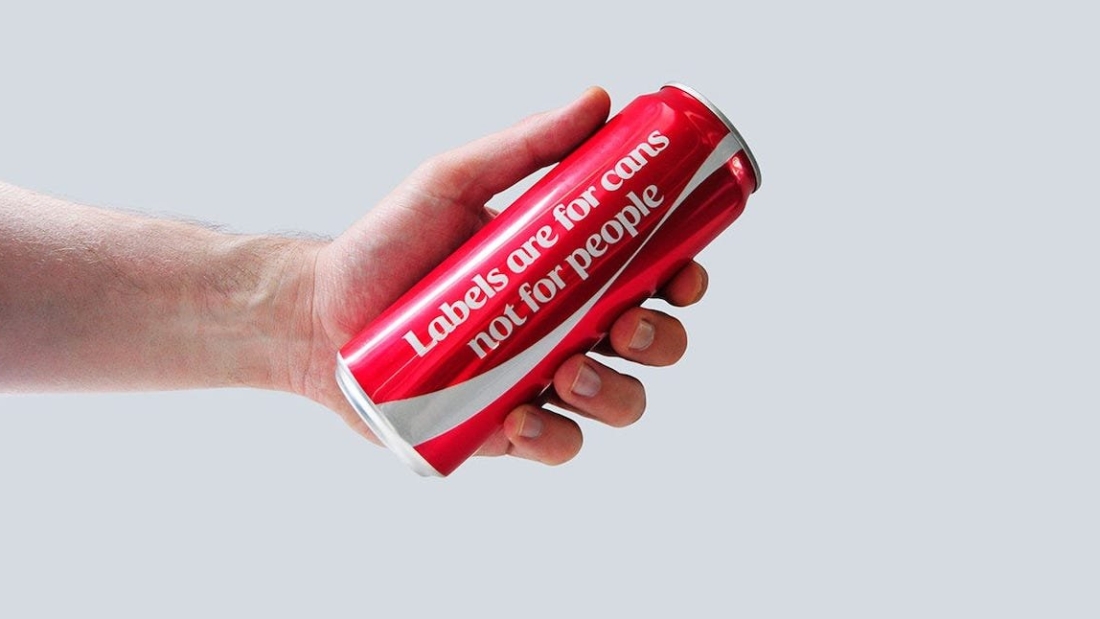
Coca-Cola\’s strategy for the campaign revolved around the idea of removing labels, both literally and metaphorically. The company removed its iconic logo from its cans, leaving only the unmistakable Coca-Cola red and white ribbon design. The message was clear: without labels, people could focus on what unites them rather than what divides them.

Execution

The campaign featured a short film, which can be viewed above, showcasing a unique social experiment where people from diverse backgrounds sat together in a dark room to break their fast during Ramadan. The participants were unable to see each other and could only communicate and connect through conversation. When the lights came on, they were surprised to find that their new friends had very different appearances, dispelling preconceived notions and biases.

Creative Elements

The creative elements of the campaign included:
1. The removal of Coca-Cola\’s logo from its cans, symbolizing the importance of removing labels and focusing on unity.
2. The short film, which conveyed a powerful message of acceptance and understanding through a relatable and emotional social experiment.
3. The use of compelling storytelling and visuals that highlighted the human connections formed without the influence of biases and stereotypes.

Masterminds behind the idea

The Coca-Cola team responsible for conceptualizing and driving the campaign worked in collaboration with FP7/DXB, an advertising agency that played a significant role in bringing the \”Remove Labels This Ramadan\” campaign to life.

Results & Analysis

The campaign generated considerable media coverage and online buzz, reaching millions of people worldwide. The short film amassed millions of views on YouTube, and the campaign received praise for its innovative approach and powerful message. Engagement on social media platforms increased, sparking conversations about tolerance, acceptance, and unity.

Impact on the Brand

The successful campaign generated extensive media coverage and online interest, reaching millions of people globally. The campaign\’s short film was viewed by millions on YouTube and applauded for its creative strategy and impactful message, while social media engagement increased and stimulated discussions on acceptance, tolerance, and unity. Coca-Cola\’s label-free campaign was a resounding success, leading to a 3.8% increase in brand loyalty and a 7.6% rise in consumption, in addition to gaining attention from media outlets worldwide. The campaign\’s video became viral, generating over 18 million views on different social media platforms. The brand\’s pioneering approach to challenging stereotypes and promoting unity was widely lauded, creating a lasting impression on its audience.

Under Armour’s “I Will What I Want” Campaign

Under Armour\’s \”I Will What I Want\” Campaign

Under Armour\’s \”I Will What I Want\” campaign was launched in 2014 and is a powerful example of how an effective marketing campaign can inspire and empower women. The campaign featured female athletes like Misty Copeland and Gisele Bundchen, who overcame obstacles to achieve their goals. The campaign not only helped Under Armour tap into the growing market for women\’s athletic apparel but also inspired a new generation of female athletes to pursue their passions and achieve their dreams.


Campaign Strategy:

The \”I Will What I Want\” campaign was designed to target women who are interested in sports and fitness. It aimed to inspire and empower women to pursue their athletic dreams by showcasing the stories of successful female athletes who overcame obstacles to achieve their goals. The campaign featured a series of ads and videos, which were designed to showcase the hard work and dedication required to achieve success in sports.

Results:

The \”I Will What I Want\” campaign was a huge success for Under Armour. The company reported a 28% increase in sales of women\’s athletic apparel in the first quarter of 2015, which was directly attributed to the success of the campaign. The campaign also helped to establish Under Armour as a leader in the women\’s athletic apparel market, increasing brand awareness and driving customer loyalty.

Conclusion:

The \”I Will What I Want\” campaign by Under Armour is a powerful example of how marketing can be used to inspire and empower women. By featuring powerful stories of female athletes who overcame obstacles to achieve their goals, Under Armour was able to tap into the growing market for women\’s athletic apparel and inspire a new generation of female athletes to pursue their dreams. The campaign offers valuable lessons for marketers, highlighting the importance of empowering messaging, user-generated content, and interactive website design. The success of the \”I Will What I Want\” campaign has cemented Under Armour\’s position as a leader in the women\’s athletic apparel market and serves as an inspiring example of how marketing can be used to promote positive change in society.

think different campaign by apple

\”Think Different\” by Apple

In 1997, Apple launched a campaign that would change the course of advertising history. The \”Think Different\” campaign was an iconic piece of marketing that not only established Apple as a cutting-edge brand but also helped to redefine the tech industry\’s approach to advertising. This case study will take an in-depth look at the \”Think Different\” campaign, examining its messaging, creative, and impact.

Background

In 1997, Apple was struggling. The company had just recorded a $1 billion loss and was facing fierce competition from Microsoft. To turn things around, Apple\’s newly appointed CEO, Steve Jobs, knew he needed to do something bold. Jobs had always been a visionary and believed that Apple could become a leader in the tech industry if they focused on innovation and creativity.

To communicate this message, Jobs turned to advertising agency TBWA/Chiat/Day. Jobs had worked with the agency before and believed that they could help Apple achieve its goals. Together, they developed the \”Think Different\” campaign.


Campaign Strategy

The \”Think Different\” campaign was focused on Apple\’s brand values of creativity, innovation, and individuality. The campaign\’s messaging was centered around the idea that \”the people who are crazy enough to think they can change the world, are the ones who do.\” The ads featured black and white photographs of iconic figures from history, including Albert Einstein, Mahatma Gandhi, and Martin Luther King Jr.

The campaign was intended to be a departure from traditional tech advertising, which focused on the product\’s technical specifications. Instead, the \”Think Different\” campaign focused on Apple\’s brand values and the way in which their products could help users to be more creative and innovative.

Creative

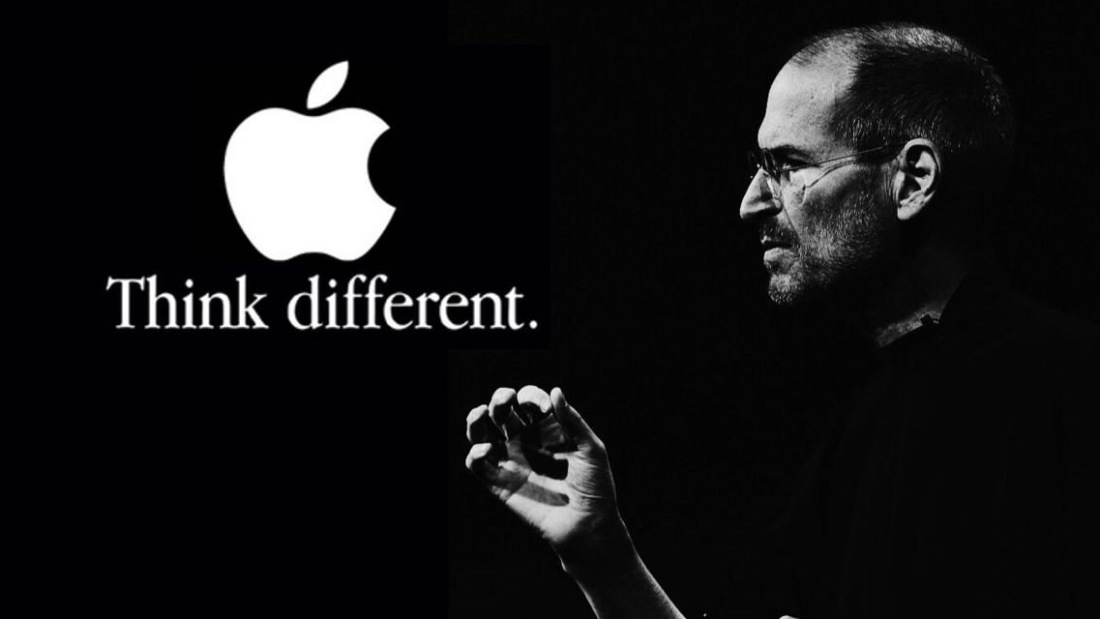
The \”Think Different\” campaign\’s creative was stunning. The ads featured beautiful black and white photography, with the iconic figures positioned against a plain white background. The ads were simple but powerful, with the copy reading \”Think Different\” and the Apple logo at the bottom.

One of the most memorable ads from the campaign featured Muhammad Ali, one of the greatest boxers of all time. The ad showed Ali\’s face in profile, with the copy reading \”Think Different.\” The ad was a powerful statement about individuality and non-conformity, qualities that Apple wanted to associate with its brand.

The campaign also featured a TV commercial that aired during the 1997 Emmy Awards. The ad featured footage of the iconic figures from the print ads, along with a voiceover from actor Richard Dreyfuss. The commercial ended with the tagline \”Think Different\” and the Apple logo.


\"think

Impact

The \”Think Different\” campaign was a massive success. The campaign was awarded several prestigious advertising awards, including the Grand Prix at the Cannes Lions International Advertising Festival. The campaign also helped to establish Apple as a cutting-edge brand that valued creativity and innovation.

The campaign\’s impact was not just limited to the advertising industry. The \”Think Different\” campaign helped to create a cultural movement around creativity and individuality. The ads featured iconic figures from history who had changed the world through their unique vision and talents. This message resonated with consumers, who saw Apple as a brand that valued their individuality and encouraged them to think differently.

The \”Think Different\” campaign also helped to kickstart Apple\’s comeback. The campaign helped to re-establish Apple as a brand that was focused on innovation and creativity. This message was reflected in the products that Apple released in the years following the campaign, including the iMac, iPod, and iPhone.


Conclusion

The \”Think Different\” campaign was a game-changer for Apple and the advertising industry as a whole. The campaign\’s messaging and creative were powerful and helped to establish Apple as a brand that valued creativity and innovation. The campaign also created a cultural movement around individuality and non-con formity that resonated with consumers and contributed to Apple\’s success in the years to come.

The campaign\’s impact can still be seen today, as Apple continues to innovate and push boundaries in technology and design. Its influence on advertising is also evident, as many brands have attempted to replicate its success with similar campaigns.

Overall, the \”Think Different\” campaign is a prime example of how a powerful message, combined with effective marketing and creative, can create a cultural movement that resonates with consumers and sets a brand apart from its competitors.

just do it by nike

Nike \”Just Do It\” Campaign

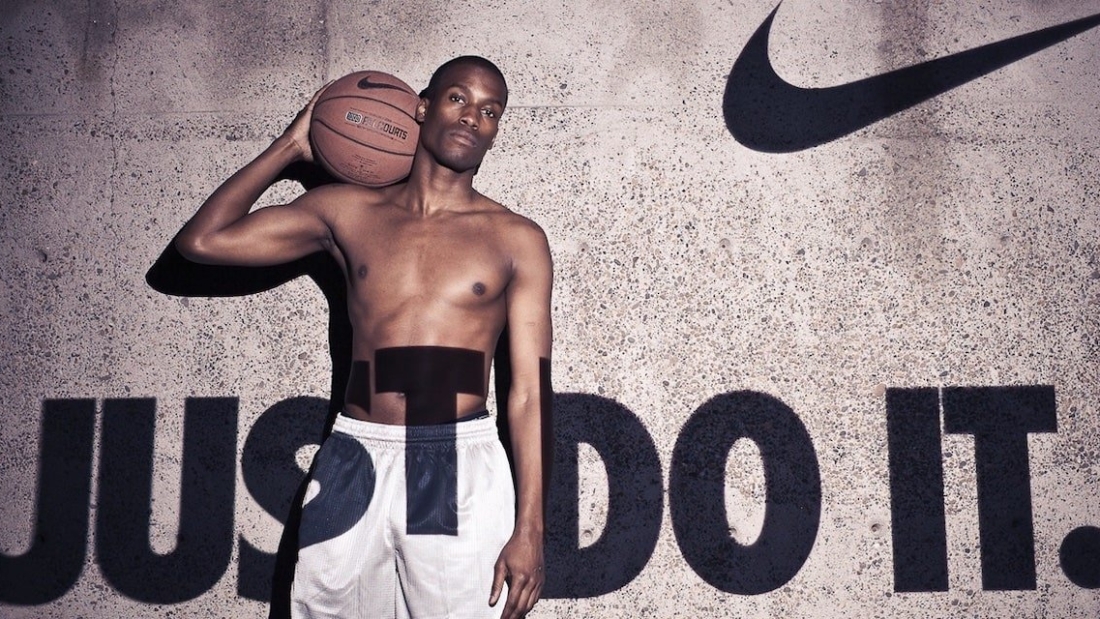
The Nike \”Just Do It\” campaign is an iconic example of successful marketing that has transcended time and resonated with consumers for decades. The campaign was launched in 1988 and has since become synonymous with Nike\’s brand and philosophy, inspiring countless athletes and non-athletes alike to pursue their goals with determination and commitment. In this comprehensive marketing case study, we will examine the strategy behind the \”Just Do It\” campaign, the impact it had on Nike\’s sales and brand perception, and the factors that contributed to its success.


Background:

Prior to the launch of the \”Just Do It\” campaign, Nike was primarily known as a running shoe company with limited market share in the highly competitive sportswear industry. In 1985, the company had hired advertising agency Wieden+Kennedy to develop a new marketing campaign that would help it compete with major players like Adidas and Reebok.

The Campaign Strategy:

Wieden+Kennedy developed a campaign that was centered around the concept of \”Just Do It\” – a simple, powerful, and inspiring tagline that captured the essence of Nike\’s brand and philosophy. The campaign was designed to inspire and motivate people to take action, to pursue their dreams, and to overcome any obstacles that may stand in their way. The campaign featured a range of athletes, from professionals to amateurs, and focused on the hard work, dedication, and perseverance required to achieve success.

The first commercial in the campaign was launched during the 1988 Summer Olympics and featured a 80-year-old runner completing a marathon. The commercial ended with the iconic \”Just Do It\” tagline, and the campaign quickly became a hit with consumers. The campaign was supported by a range of print and outdoor ads that featured the tagline and images of athletes in action.


Impact on Sales:

The \”Just Do It\” campaign was an instant success, helping to transform Nike from a niche running shoe company to a global sportswear powerhouse. In its first year, the campaign increased Nike\’s sales by over 50%, from $877 million to $1.3 billion. The campaign continued to drive sales growth in the years that followed, helping Nike to dominate the sportswear industry.

According to a 1990 report by Advertising Age, Nike\’s market share in the athletic shoe industry had increased from 18% to 43% since the launch of the \”Just Do It\” campaign. In addition to boosting sales, the campaign helped to solidify Nike\’s brand identity and position the company as a leader in the sportswear industry.


\"Nike


Factors Contributing to Success:

The success of the \”Just Do It\” campaign was due to a number of factors, including the powerful and inspiring message of the tagline, the emotional impact of the ads, and the use of real athletes in the commercials. The campaign resonated with consumers and helped create a strong emotional connection between Nike and its customers.

The campaign was also notable for its diverse representation of athletes, including women and people of color. This was a departure from the norm in the industry, which had traditionally featured white male athletes in its ads. The inclusion of diverse athletes helped to broaden Nike\’s appeal and attract a wider range of consumers.


Longevity of the Campaign:

The \”Just Do It\” campaign has endured for over 30 years, demonstrating its ability to transcend time and remain relevant to consumers. The campaign has evolved over the years, with new taglines and creative executions, but the core message of inspiring people to take action and pursue their goals has remained constant. Nike has continued to leverage the campaign\’s success through partnerships with high-profile athletes, including Michael Jordan, LeBron James, and Serena Williams, who have become synonymous with the brand.


Impact on Culture:

The \”Just Do It\” campaign has had a significant impact on popular culture, inspiring a wide range of people to pursue their dreams and overcome obstacles. The campaign\’s message of determination and perseverance has resonated with people from all walks of life, and has been referenced in everything from movies and TV shows to political speeches and social media posts. The \”Just Do It\” tagline has become a cultural touchstone, and has been adapted and parodied by countless brands and individuals.

The Role of Social Media:

In recent years, Nike has used social media to extend the reach of the \”Just Do It\” campaign and engage with consumers in new ways. The company has created a range of social media campaigns that build on the \”Just Do It\” message, including the #BetterForIt campaign, which encourages women to push themselves and achieve their fitness goals. Nike has also leveraged social media to engage with consumers on social and political issues, such as its support for Colin Kaepernick and the Black Lives Matter movement.


Lessons Learned:

The success of the \”Just Do It\” campaign offers several valuable lessons for marketers. First, the power of a simple and compelling message should not be underestimated. The \”Just Do It\” tagline has endured for over three decades because it speaks to a fundamental human desire to achieve success and overcome obstacles.

Second, the use of real people, particularly diverse individuals, in advertising campaigns can help to broaden a brand\’s appeal and create a deeper emotional connection with consumers. Nike\’s inclusion of women and people of color in the \”Just Do It\” campaign helped to set the brand apart from its competitors and attract a wider range of consumers.

Finally, the importance of a strong brand identity and positioning cannot be overstated. The \”Just Do It\” campaign helped to solidify Nike\’s brand identity as a company that stands for determination, perseverance, and achievement. This positioning has helped the brand to maintain its relevance and appeal to consumers for over 30 years.


Conclusion:

The \”Just Do It\” campaign is a marketing case study that continues to inspire and educate marketers. The campaign\’s success is a testament to the power of a simple and compelling message, the use of real people in advertising, and the importance of a strong brand identity and positioning. The campaign has endured for over 30 years, and its impact on popular culture and the sportswear industry is a testament to its enduring appeal. As marketers continue to navigate the competitive landscape, they would do well to study the \”Just Do It\” campaign and learn from its success.

The “Real Beauty” Campaign by Dove

The \”Real Beauty\” Campaign by Dove (Demo)

The beauty industry has long been known for setting unrealistic standards of beauty, promoting harmful body image ideals that can lead to low self-esteem and even eating disorders. In 2004, Dove, a personal care brand owned by Unilever, launched its “Real Beauty” campaign to challenge these traditional beauty standards and promote a more inclusive and realistic image of women.

This case study will analyze the \”Real Beauty\” campaign, exploring its impact on the beauty industry and how it helped Dove become a leader in promoting body positivity and self-confidence.

The \”Real Beauty\” Campaign:

Launched in 2004, the \”Real Beauty\” campaign marked a significant shift in the beauty industry\’s marketing approach. Rather than featuring the traditional airbrushed and idealized models, the campaign featured \”real\” women of all shapes, sizes, and ages in its ads. The tagline for the campaign was \”Real Beauty Comes In All Shapes And Sizes,\” and its aim was to encourage women to feel beautiful in their own skin, no matter their shape, size, or age.

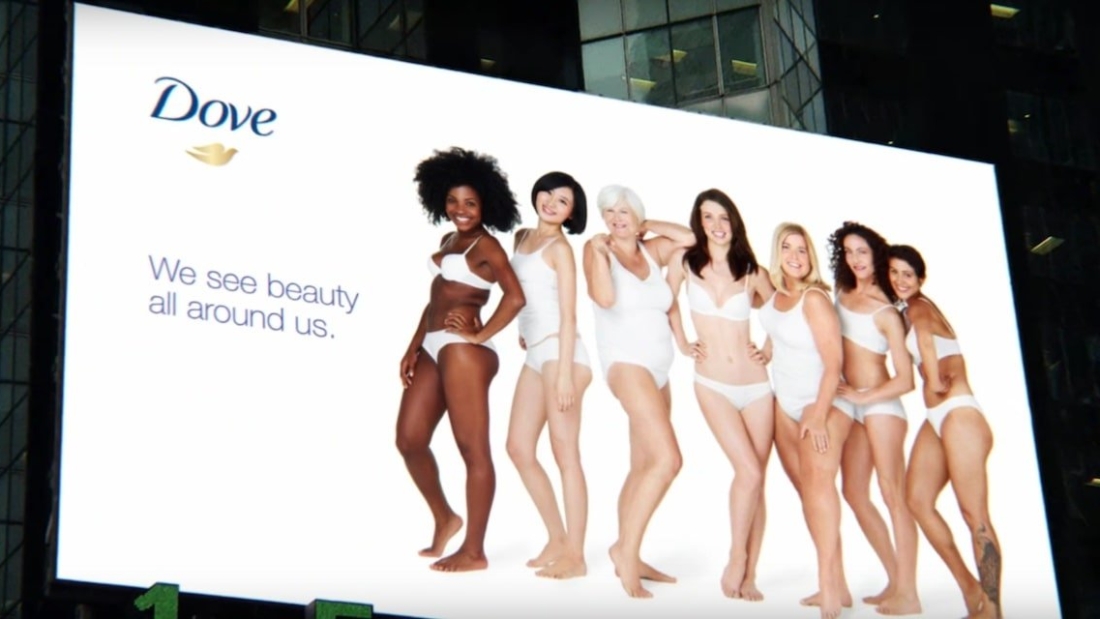
The campaign\’s first ad was a series of billboards, featuring six women with different body types, all wearing white underwear. The ads were deliberately unretouched, showing the women with imperfections like cellulite and stretch marks. The ads were accompanied by the tagline \”We believe that beauty comes in all shapes, sizes, and ages,\” along with a call-to-action to visit the campaign\’s website to learn more.

The campaign expanded in subsequent years, with additional print ads, TV commercials, and online content. One notable ad showed women of all ages, races, and sizes in white t-shirts and underwear, standing in a line with the words \”Real Women\” written above them.


Impact of the Campaign:

The \”Real Beauty\” campaign had a significant impact on the beauty industry, challenging traditional beauty standards and promoting a more inclusive and diverse image of women. The campaign received widespread media attention, with many praising Dove for promoting body positivity and self-confidence.

The campaign\’s success was also reflected in its sales figures. According to Unilever, the parent company of Dove, the campaign helped to boost sales of its Dove brand by 700 percent in the first two months of the campaign. In addition, the campaign won several awards, including the Grand Effie award in 2007.

The campaign\’s impact was not just limited to sales and awards, however. It also helped to change the conversation around beauty standards and promote a more positive body image. A survey conducted by Dove in 2016 found that only 4 percent of women around the world consider themselves beautiful, while 80 percent of women agree that every woman has something about her that is beautiful.

The Role of Social Media:

The \”Real Beauty\” campaign also leveraged the power of social media to extend its reach and engage with consumers. The campaign\’s website featured interactive tools and resources, such as the \”Real Beauty Sketches\” video, which showed women describing themselves to a forensic artist who then drew them based on their descriptions. The video highlighted how women often underestimate their own beauty and encouraged them to see themselves in a more positive light.

Dove also launched a hashtag campaign, #RealBeauty, which encouraged women to share their own stories and photos of what \”real beauty\” means to them. The campaign was a huge success, with the hashtag being used over 3 million times on Instagram alone.

Lessons Learned:

The \”Real Beauty\” campaign offers several valuable lessons for marketers. First, the power of challenging traditional norms and promoting inclusivity and diversity in advertising cannot be overstated. By featuring \”real\” women of all shapes, sizes, and ages, Dove was able to set itself apart from competitors and tap into a growing desire among consumers for more authentic and realistic representation of beauty.

Second, the campaign also highlights the importance of engaging with consumers through social media. By creating interactive content and launching a hashtag campaign, Dove was able to extend the reach of its message and encourage consumers to actively participate in the conversation around beauty standards.

Finally, the \”Real Beauty\” campaign shows the power of authenticity in advertising. By using unretouched photos and featuring \”real\” women in its ads, Dove was able to create a more relatable and trustworthy brand image, which resonated with consumers and helped to boost sales.


Conclusion:

The \”Real Beauty\” campaign by Dove has had a significant impact on the beauty industry, challenging traditional beauty standards and promoting a more inclusive and diverse image of women. By featuring \”real\” women of all shapes, sizes, and ages in its ads and engaging with consumers through social media, Dove was able to create a more authentic and trustworthy brand image, which resonated with consumers and helped to boost sales.

The campaign offers valuable lessons for marketers, highlighting the importance of challenging traditional norms, engaging with consumers through social media, and promoting authenticity in advertising. The success of the \”Real Beauty\” campaign has cemented Dove\’s position as a leader in promoting body positivity and self-confidence and serves as an inspiring example of how marketing can be used to promote positive change in society.

"Thank You, Mom" by Procter & Gamble: A Heartwarming Tribute to the Unsung Heroes of the Olympics

\”Thank You, Mom\” by Procter & Gamble: A Heartwarming Tribute to the Unsung Heroes of the Olympics (Demo)

Introduction:

The Olympics is an event that celebrates the triumph of the human spirit and the pursuit of excellence. However, behind every great athlete, there is often a mother who has played an instrumental role in their success. Procter & Gamble\’s \”Thank You, Mom\” campaign, launched during the 2014 Sochi Olympics, celebrated the role that mothers play in supporting their children\’s dreams and featured heartwarming moments between mothers and their Olympic athlete children.


Background:

Procter & Gamble is a multinational consumer goods company that has been associated with the Olympics for several years. The company\’s \”Thank You, Mom\” campaign was first launched during the 2010 Vancouver Olympics and has since become an integral part of the company\’s marketing strategy for the Olympics.


Objectives:

The main objective of the \”Thank You, Mom\” campaign was to celebrate the role that mothers play in supporting their children\’s dreams and to highlight the importance of the values of hard work, perseverance, and dedication in achieving success. The campaign also aimed to strengthen Procter & Gamble\’s brand identity and connect emotionally with consumers.


\"The

Campaign Strategy:

The \”Thank You, Mom\” campaign featured heartwarming moments between mothers and their Olympic athlete children. The campaign consisted of several video ads that showcased the sacrifices and dedication that mothers make to support their children\’s dreams. The ads featured Olympic athletes such as snowboarder Lindsey Jacobellis, skier Julia Mancuso, and figure skater Gracie Gold, along with their mothers, highlighting the important role that mothers play in their children\’s lives.

The campaign also had a strong social media presence and encouraged users to share their own stories of how their mothers had supported them in pursuing their dreams. Procter & Gamble partnered with Facebook to create a custom app that allowed users to create personalized videos to thank their mothers. The campaign also had a hashtag, #ThankYouMom, that trended on social media during the Olympics.


Results:

The \”Thank You, Mom\” campaign was a huge success and received widespread acclaim for its heartwarming and emotional content. The campaign\’s video ads received millions of views on YouTube and social media platforms. The Facebook app created for the campaign was used by millions of people to create personalized videos to thank their mothers.

The campaign also had a positive impact on Procter & Gamble\’s brand identity. The company\’s association with the Olympics and the heartwarming content of the campaign helped to strengthen the brand\’s emotional connection with consumers.


Conclusion:

The \”Thank You, Mom\” campaign by Procter & Gamble was a heartwarming tribute to the unsung heroes of the Olympics – the mothers who support their children\’s dreams and sacrifices to help them achieve success. The campaign was a powerful reminder of the values of hard work, dedication, and perseverance that are required to achieve success in any field. The campaign\’s emotional content and strong social media presence helped to connect with consumers on a deeper level and strengthened Procter & Gamble\’s brand identity.