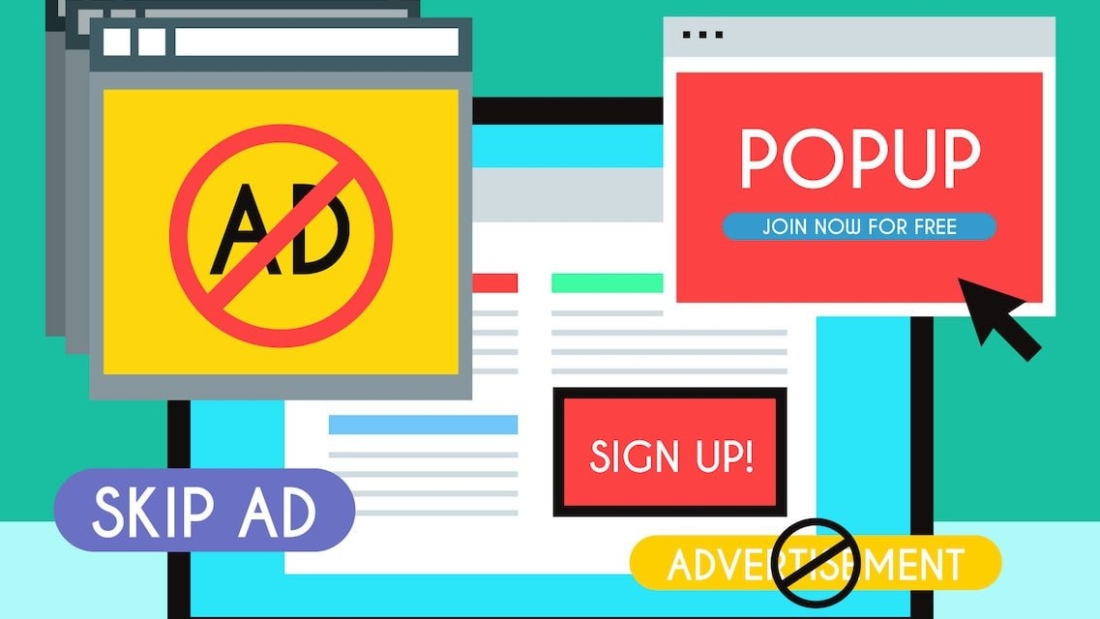
Campaigns in the Age of Ad Blockers: How to Cut Through the Noise and Reach Your Audience

Campaigns in the Age of Ad Blockers : How to Cut Through the Noise and Reach Your Audience (Demo)

Introduction:

Ad-blockers have become increasingly popular in recent years, making it more difficult for marketers to reach their target audience. While ad-blockers can help users reduce the number of irrelevant and intrusive ads they encounter online, they also pose a challenge for marketers looking to connect with consumers. In this blog, we will explore ways that businesses can cut through the noise and reach their audience in the age of ad-blockers.


1. Utilize Native Advertising

One way to reach your audience despite the presence of ad-blockers is through native advertising. Native advertising is a form of advertising that is integrated into the content of a website, making it more appealing to users. This type of advertising is less intrusive than traditional advertising and is more likely to be viewed by users as valuable and informative. In addition, native advertising is less likely to be blocked by ad-blockers, making it a good option for businesses looking to reach their target audience.


2. Focus on Quality Content

Another way to reach your audience despite ad-blockers is by focusing on quality content. Content marketing is an effective way to engage with your target audience and build brand awareness, without the need for traditional advertising. By providing useful, relevant, and interesting content, you can attract and retain customers, even if they are using ad-blockers.


3. Personalize Your Marketing Efforts

Personalized marketing can also help businesses cut through the noise and reach their target audience. By collecting data on their customers and using it to create personalized experiences, businesses can build stronger connections with their target audience. Personalized marketing efforts can also help to reduce the likelihood of customers using ad-blockers, as they are more likely to view personalized content as relevant and valuable.


4. Build Relationships with Influencers

Working with influencers can also be a powerful way to reach your target audience despite ad-blockers. Influencer marketing involves partnering with individuals who have a large following and high level of engagement, and leveraging their reach and influence to promote your brand. Influencer marketing can help businesses reach their target audience in a more organic and authentic way, without the need for traditional advertising.


5. Make the Most of Social Media

Finally, social media can be a powerful tool for businesses looking to reach their target audience in the age of ad-blockers. With over 2 billion active users, social media platforms like Facebook, Instagram, and Twitter provide a huge opportunity for businesses to connect with their target audience. By utilizing social media, businesses can engage with their target audience, build brand awareness, and drive conversions, all without the need for traditional advertising.


Conclusion:

The rise of ad-blockers has made it more challenging for businesses to reach their target audience. However, there are still several effective strategies that businesses can use to cut through the noise and reach their audience. From native advertising and quality content to personalized marketing and influencer partnerships, businesses have a range of options for connecting with their target audience. By utilizing these strategies and leveraging the power of social media, businesses can reach their target audience and achieve their marketing goals, even in the age of ad-blockers.

Unleashing the Power of AI: Transforming the Landscape of Digital Marketing

Unleashing the Power of AI : Transforming the Landscape of Digital Marketing (Demo)

Introduction

Artificial intelligence (AI) is rapidly changing the way businesses approach marketing and advertising. From chatbots and virtual assistants to predictive analytics and machine learning, AI technology is being used to automate and optimize various aspects of digital marketing. In this blog post, we will explore the impact of AI on digital marketing and how businesses can leverage this technology to improve their marketing efforts.

Chatbots and Customer Service

One of the most prominent ways AI is impacting digital marketing is through the use of chatbots. Chatbots are computer programs that are designed to simulate conversation with human users. They can be integrated into a business\’s website or social media channels to provide instant customer service and answer frequently asked questions. This allows businesses to engage with customers in real-time and provide a more personalized experience. Chatbots can also be used to collect data on customer interactions, which can then be analyzed to inform marketing strategies.

Predictive Analytics

Another way AI is impacting digital marketing is through predictive analytics. Predictive analytics uses machine learning algorithms to analyze large amounts of data and make predictions about future events. This technology can be used to identify patterns in customer behavior, such as which products or services they are most likely to purchase. This information can then be used to create targeted marketing campaigns that are more likely to be successful.

Optimizing Digital Advertising

AI technology is also being used to optimize digital advertising. Machine learning algorithms can analyze data on customer behavior, demographics, and browsing history to identify the most effective ad targeting strategies. This allows businesses to reach their desired audience more effectively and improve their return on investment. Additionally, AI can be used to automate the process of creating and placing ads, which can save businesses time and resources.

Virtual Assistants

AI-powered virtual assistants are also becoming more prevalent in digital marketing. Virtual assistants, such as Amazon\’s Alexa and Google Home, can be integrated into a business\’s website or mobile app to provide customers with a more personalized experience. Virtual assistants can be programmed to provide information on products or services, make recommendations, and even complete transactions. This allows businesses to provide a more seamless customer experience and increase the chances of converting leads into customers.

Challenges of AI in Digital Marketing

The use of AI in digital marketing is not without its challenges, however. One of the biggest challenges is data privacy and security. As businesses collect more data on customers, it becomes increasingly important to ensure that this data is being used ethically and securely. Additionally, there are concerns about the potential for AI to be used to manipulate or deceive customers, which could damage a business\’s reputation.

Another challenge is the cost of implementing AI technology. While AI can offer significant benefits, it can be expensive to develop and maintain. Businesses must carefully weigh the potential benefits against the cost of implementation to determine whether it is a viable investment.

How Businesses Can Leverage AI in Digital Marketing

To take advantage of the benefits of AI in digital marketing, businesses should start by identifying the areas where AI can be most beneficial. This might include automating customer service, optimizing ad targeting, or improving personalized recommendations. Businesses should also invest in data privacy and security to ensure that customer data is being used ethically and securely.

Additionally, businesses should work with experienced AI developers and data scientists to ensure that the technology is implemented correctly. This might involve outsourcing development or hiring in-house experts.

Conclusion

In conclusion, AI is rapidly changing the way businesses approach digital marketing. From chatbots and virtual assistants to predictive analytics and machine learning, AI technology is being used to automate and optimize various aspects of digital marketing. Businesses that are able to effectively leverage AI will be better equipped to engage with customers in real-time, provide a more personalized experience and improve their return on investment. However, it is important for businesses to consider the challenges such as data privacy and security, and cost of implementation before implementing AI technology. As the technology continues to evolve, the potential for AI in digital marketing will only continue to grow, making it an exciting and ever-evolving field for businesses to explore.

The Role of Storytelling in Branding

Brand Narratives: The power of Story telling in Building Strong Brands (Demo)

Brand storytelling is no longer nice to have. It is an ABSOLUTE NEED.

Humanity is becoming the new premium in today\’s fast-paced, highly automated, and digitally-driven culture. The human touch is becoming rarer and rarer and treasured due to the internet\’s constant power to reward us with ease and immediate gratification.

In this environment, businesses can no longer afford to be anonymous. Businesses need to engage customers on a level never before seen, to touch their emotions and pull at their heartstrings.

This is where brand storytelling comes in…

Brand storytelling is the unified narrative that ties together the facts and emotions that your brand elicits. Stories are the best way to engage an audience and tell them why your brand is worth their time, money, and attention.

In this post, you will learn: What is Brand Storytelling? Why it is so important for brands now? How to create a story that works for your company?

Let\’s get started!


What Exactly Is Brand Storytelling?

Brand storytelling is a tactic for growing your audience by establishing an emotional connection with them. Your brand narrative is a synthesis of the following:

  • Who you are,
  • What you do,
  • What do you care about, and
  • How you assist others.

It\’s a narrative about your brand\’s existence and why people should connect with you.


Why Is Storytelling So Crucial For Brands Now?

\"Why

Because people are more likely to buy from someone they like, trust and feel connected to. If a story resonates with your audience, it can make the difference between them buying from you or not.

According to a study by The New York Times, stories help us understand one another and create connections that lead to empathy.

That means your audience must understand who you are, why they should care about you, and what they may have in common with you. But how can you do it efficiently? By telling your brand\’s narrative in every piece of content you create.

If you\’re on the fence about sharing your brand narrative, here are three reasons why you should.


  • Brand narrative distinguishes you.

What distinguishes you? There\’s a reason you\’re different—whether it\’s your product design or service features—and consumers want to know what it is.

You may think it\’s self-indulgent, but the most important aspects of your brand\’s story—how it came to be, grew, learned to perform excellent work, and chose what it stands for—are more engaging to others than you think.

You may easily beat out your rivals if you aggressively highlight the qualities that set you apart in your content.


  • Stories transform the imagination into a virtual reality tool.

With the power of the human imagination, who needs virtual reality technology? In the sense that they stimulate brain regions that affect how you perceive what you see or hear and contribute to your ability to form your own opinions, stories operate as brain fuel. Create a narrative that will stay in the minds of your viewers, and their brains will take care of the rest.


  • It brings your brand to life.

People desire to talk to other people. Fortunately, your brand is made up of people (ideally). By revealing that portion of your brand\’s narrative, you make it easy for consumers to know who you are and, more crucially, trust you. (The 2019 Edelman Trust Barometer Special Report found that just 34% of individuals trust the brands they consume.)

Too often, companies neglect the power of narrative in favor of focusing on product features, which means they pass up an immense potential to make an impact. Sharing your brand\’s story is the most effective method to bridge the gap, establish transparency, and create more meaningful interactions.


Examples of Brand Storytelling

Some businesses have a meaningful narrative inherent in their company and product DNA (e.g., TOMS shoes). In contrast, others must create a creative tale to make their product significant (e.g., most enterprise SaaS companies).

Here are some instances of some of the world\’s finest brand storytellers.


  • Warby Parker

Warby Parker revolutionized the eyeglass market by making designer eyeglasses cheap, environmentally friendly, and simple to try on at home. Their brand is also built on a compelling tale. One of its founders missed the first semester of graduate school because he misplaced his spectacles on a backpacking trip, and they were too expensive to replace. He and his team decided to address the issue using a plant-based frame structure that is healthier for the environment.


  • Coca-Cola 

Coca-cola’s legendary Santa ad is an excellent example of brand storytelling. For example, after the brand\’s \’Give and take, say I\’ promotion, children began putting Cokes outside their houses for Santa. Their Santa figure is so well-known that simply seeing his face recalls their tales.


  • Nike

Nike built itself in people\’s imaginations in the 1990s with superb storytelling.

In 1999, they produced a stunning ad to remember Michael Jordan\’s career. At a time when everyone was pressing a hard pitch, Nike let Michael Jordan’s story speak for itself. At the conclusion, \”Just Do It,\” the swoosh emerges, and that\’s all the space their brand took up. The tale created an emotional connection between the fans and the player – Nike was just a tiny part of the transaction.


Getting Started with Your Brand\’s Story

Fortunately, you\’re in better shape than most people if you have a great story and a desire to share it. It\’s time to actively spread your message by coming up with creative ways to do it.


Start with the core of your brand. 

Your brand\’s purpose, vision, mission, and values make up its brand heart. The base of your brand narrative is built on these guiding ideas.


Be distinct in an ocean of similarity.

Having a high-quality product or service is not enough; you also need to know how to market it in a way that sets you apart from the competition. That is why brand storytelling is so crucial.

Focus on building a meaningful, enduring, and authentic brand rather than bombarding your audience with figures, facts, and testimonies. Put your point into a narrative that engages audiences, clarifies facts, and elicits a feeling. Share your brand\’s history, difficulties, triumphs, and value propositions through narrative; no other brand can replicate YOUR story.


Make it resonate.

The ultimate aim of every tale is for it to be memorable, resonating with customers for days, if not years. With its Budweiser advertisement during the 2014 Super Bowl, Anheuser-Busch successfully did just that.

An interaction between a puppy and a Clydesdale is depicted in the advertisement. A group of Clydesdales rushes in front of the vehicle to stop the puppy\’s adoption and prevent it from being driven away in a car. A brilliant slogan — \”best buds\” — appears on the screen, connecting the bond with the Budweiser brand. In the end, the puppy is allowed to live on the farm with the Clydesdales. According to a TIVO survey, it was the most-watched Super Bowl commercial in the past 50 years.


Be helpful, not hype-full.

Instead of being excessively promotional, telling true, honest tales will connect with your audience more. Think about the correspondence you get from your preferred brands. Do they make empty promises? Presenting implausible or impossible goals? Most likely not. Find narratives that show your audience how you can assist them. Being human will go a long way in your marketing encounters.


What’s your story?

In a congested marketplace, when everyone is focused on doing things quicker, more effectively, and automatically, be the brand that dares to BE HUMAN. Show your consumers that you care, even if it means (gasp!) slowing down or doing things differently.